When the temperature drops, a lot of businesses put window graphics on the back burner. The assumption is that vinyl and cold weather don’t mix, so it’s safer to wait until spring.
In reality, fall is one of the best times to refresh your windows. Before you shelve the project, here are the most common misconceptions we hear, along with a look at one design detail that can make or break the final result: window mullions.
Myth 1: You Have to Wait for Summer to Install Window Vinyl
Adhesives do have a minimum application temperature, often around 10°C for standard films, though some are rated lower. But what matters most is the temperature of the glass itself, and that can vary a lot from window to window. A south-facing window soaks up the sun, so its glass can be warmer than the air outside. A north-facing window stays in the shade and holds the cold. That’s why our team plans installs window by window, based on which way each one faces. Many graphics are also applied to the interior side of the glass, where a heated building keeps conditions comfortable for both the installer and the adhesive. There are limits. Cold weather installs are typically limited to small kiss-cut vinyl and temporary window graphics, since there’s a chance of failure. We tend to avoid installing below 0°C and are cautious between 0°C and 5°C.Myth 2: Fall Graphics Won’t Stick Through Winter
A properly installed graphic is built to last. Adhesion depends on the right film, a clean surface, and correct installation, not the season. Big temperature swings are exactly why material choice matters, and why we recommend films suited to your climate rather than a one-size-fits-all option.
Myth 3: Vinyl Will Damage My Windows
Quality window vinyl is designed to be removed cleanly when its time is up. Understanding your glass and the film in advance, including the type of window and any existing coatings, helps avoid surprises.
Window Mullions: The Detail That Changes Everything
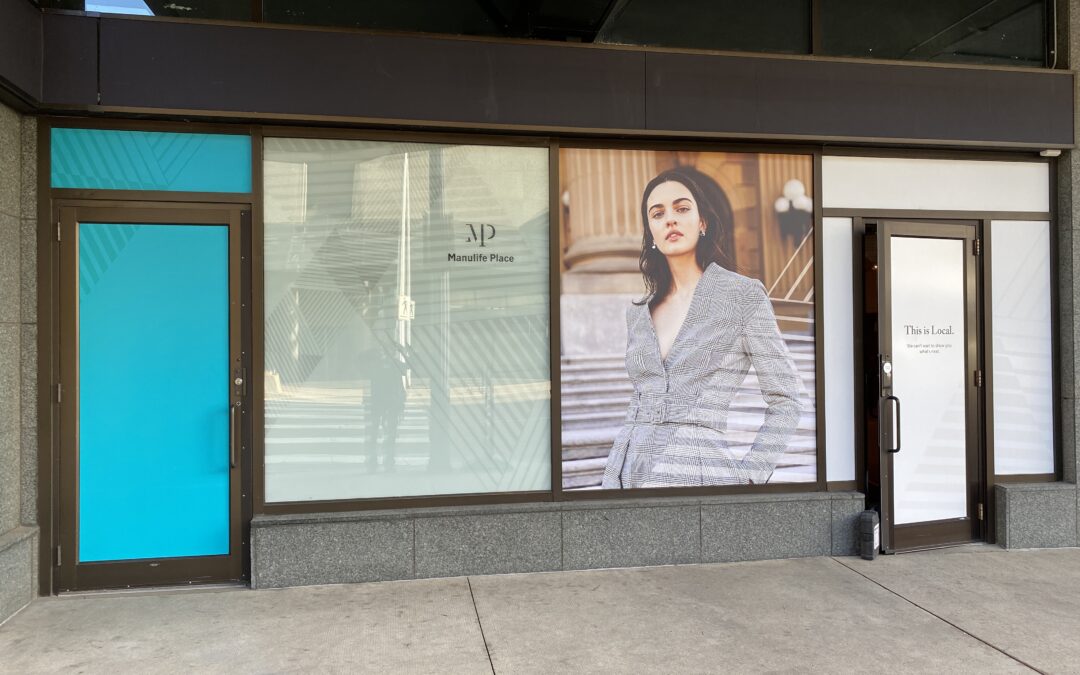
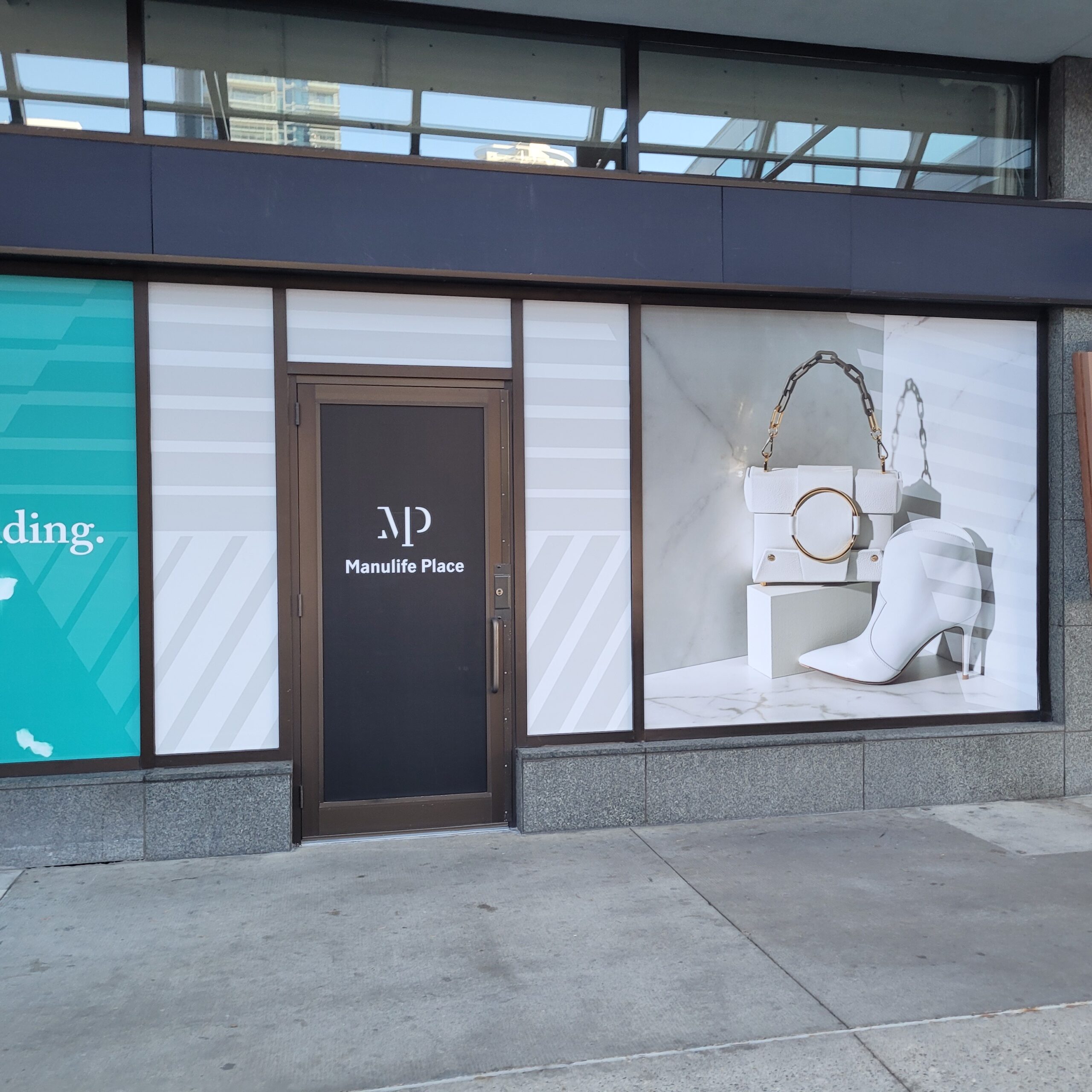
What are mullions and why do they matter? Mullions are the bars or frames that divide a window into separate panes of glass. They’re common on storefronts, office buildings, and larger commercial windows, and they come in many shapes, from simple vertical dividers to full grid patterns.
Window vinyl can’t bridge a mullion, because it can only stick to glass. Any graphic that crosses a mullion has to be split into separate pieces, so the design must be planned around the gaps. If it isn’t, the result can be awkward breaks through a logo, text that doesn’t line up, or an image that looks cut apart.
Tips For Designing Around Mullions
-
-
- Measure the glass, not the window. Each pane’s visible size is what counts, and panes aren’t always identical.
- Keep key elements within a single pane. Place logos, phone numbers, and headlines inside one pane so they don’t get cut.
- Let large images flow across panes on purpose. With careful alignment, a panoramic design can look intentional, with the mullions acting as natural dividers.
- Plan for the gap. Account for the width of the mullion in your artwork so the image still lines up from pane to pane.
- Get a site measure. Photos help, but measurements taken at the window prevent costly reprints.
-
The Takeaway
Fall is a great time for window vinyl, and the right planning makes all the difference. Choose the right film, work with the weather, and design with your mullions in mind, and you’ll have windows that look sharp all winter long.